
Who We Are


Who We Are
ACCESS is a collaborative public–private partnership dedicated to protecting marine wildlife and strengthening the health of ocean ecosystems along California’s north-central coast. Through rigorous scientific research and long-term monitoring, we provide critical data that supports informed decision-making by resource managers, policymakers, and conservation leaders.
Our work is grounded in the belief that effective ocean stewardship requires thoughtful, adaptive management guided by reliable, ecosystem-wide analysis of both historical and current conditions. By studying patterns, changes, and connections within marine environments, we help ensure that conservation strategies remain responsive and resilient.
Our Focus
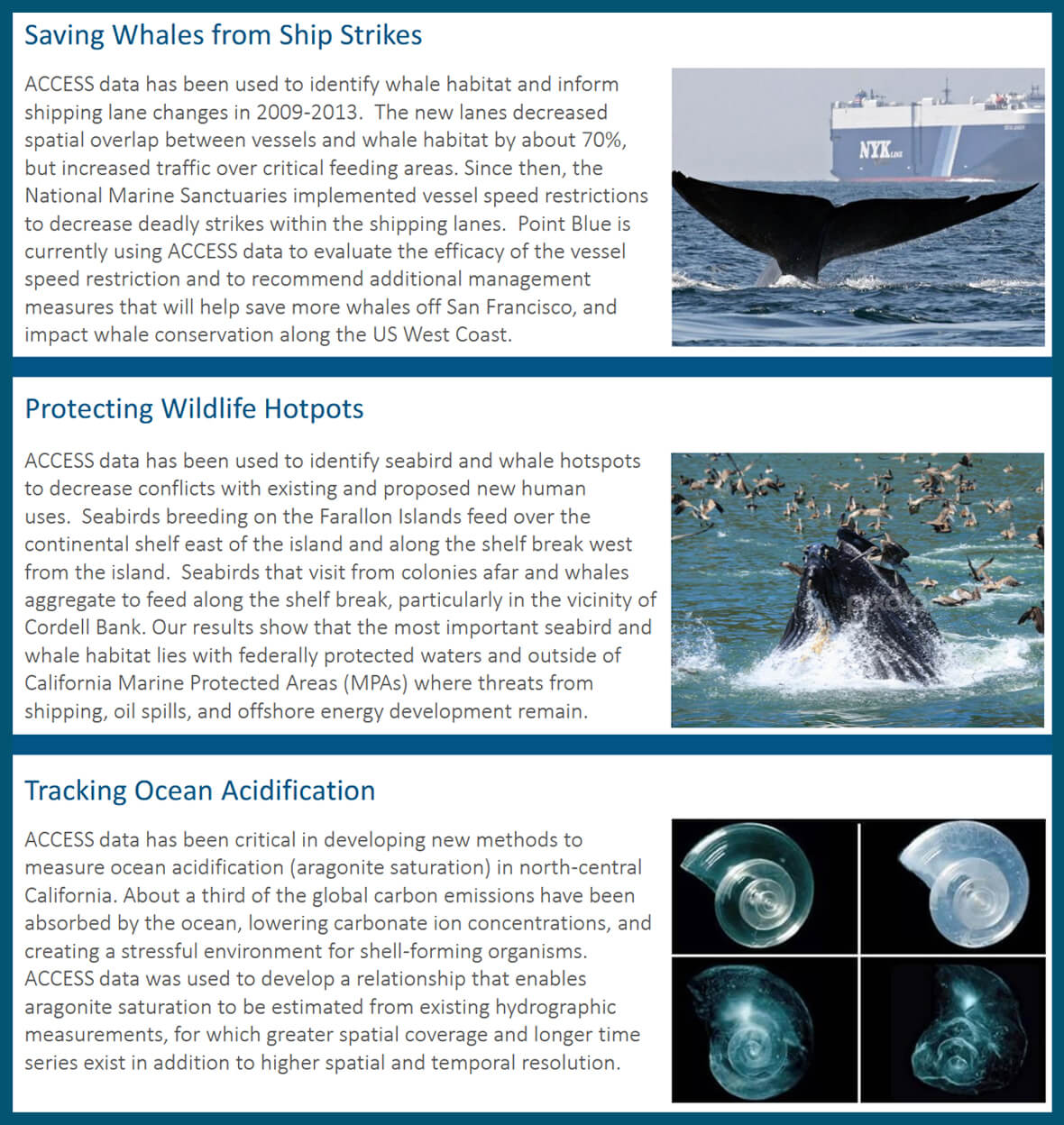
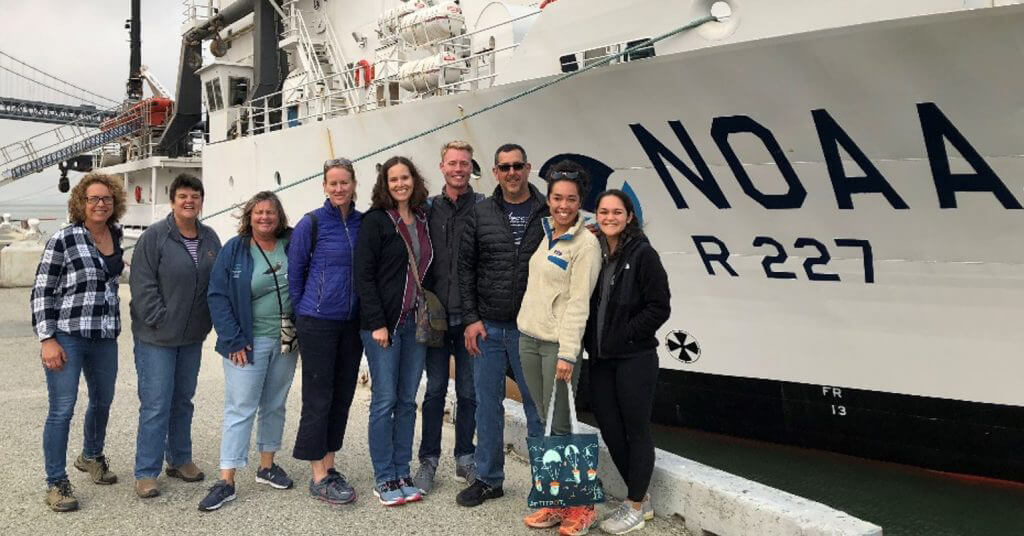
ACCESS focuses on oceanic habitats in both Federal and State waters of northern and central California, including the Cordell Bank, Greater Farallones, and Monterey Bay National Marine Sanctuaries. These nationally significant marine areas serve as living laboratories for understanding biodiversity, climate impacts, and ecosystem health. Founded through a partnership between Point Blue Conservation Science, Cordell Bank National Marine Sanctuary, and Greater Farallones National Marine Sanctuary, ACCESS brings together scientists, educators, and conservation professionals who share a commitment to protecting our oceans for future generations.
Our Partners
Our network of partners includes the Greater Farallones Association, University of California Davis – Bodega Marine Laboratory, San Francisco State University – Estuary and Ocean Science Center, Pomona College, Hawaiʻi Pacific University, and numerous public agencies, including the California Department of Public Health, the San Francisco Bay National Wildlife Refuge Complex – Farallon Island National Wildlife Refuge, and the National Park Service. Together, we combine expertise, resources, and shared purpose to advance marine conservation. To learn more about our work, you may download a one-page overview of ACCESS, featuring program highlights and a map of our study area.

Have Any Question? Find Answer.
Got questions? We’ve got you covered. Explore our FAQ section to get quick answers on everything from services to timelines to pricing

Q.Where does ACCESS conduct its ocean research?
ACCESS conducts its research in north-central California, one of the most productive marine regions in the world. Studies take place within Federal and State waters in Cordell Bank, Greater Farallones, and Monterey Bay National Marine Sanctuaries, where long-term monitoring helps track changes in ocean ecosystems.
Q.Why is north-central California such an important area for marine life?
This region benefits from coastal upwelling, a natural process that brings cold, nutrient-rich water to the surface. This fuels plankton growth, supports abundant zooplankton populations, and attracts seabirds, marine mammals, and other wildlife, creating a thriving marine ecosystem.
Q.What types of research activities does the ACCESS team conduct?
ACCESS researchers collect water samples for chemical analysis, study zooplankton populations, and monitor marine birds and mammals. These surveys help scientists understand ocean conditions, food webs, and wildlife patterns across different seasons and climate cycles.
Q.What makes the National Marine Sanctuaries ideal for research?
National Marine Sanctuaries serve as NOAA sentinel sites, making them ideal locations for recurring, long-term studies. Research conducted in these areas helps detect ecosystem changes related to major events such as El Niño and long-term shifts in ocean climate.
Q.How can the public help support whale conservation efforts?
Members of the public can contribute by using mobile apps such as Whale Alert 2.0 for Apple, Whale Alert for Android, and Spotter Pro for trained naturalists. These tools allow users to report whale sightings, helping reduce ship strikes and improve protection efforts along the West Coast.